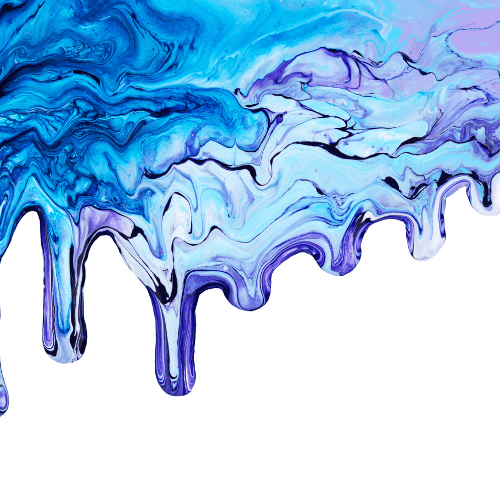
So I saw a lot of videos on the internet of beautiful marbled abstract pieces created by the acrylic pouring technique and decided to give it a try. When I was creating my first piece and doing some research, I discovered a few things to keep in mind when trying out this method of painting. One main question I had was what do you need for acrylic pouring? So here are 5 things to think about before you start.
You don’t need to buy expensive mediums.
If you’ve already been introduced to acrylic pouring, you’ll know that acrylic paints appear very liquidy. I was a little unsure at first. I assumed that people simply mixed highly pigmented paints with a little water and then poured. It turns out that acrylic pouring medium was used. So, after some more research, I discovered that you don’t need to invest in an acrylic pouring medium; instead, good old PVA glue/Elmer’s glue will be enough.
It gets messy so be prepared
I wasn’t prepared for the mess, I just laid down some papers thinking all will be well. It turns out that it doesn’t matter how small your acrylic pour painting is, just open up some garbage bags or lay down a plastic sheet. With this painting method the paint has a mind of its own; it’s a messy technique that produces intricately pretty art.
Stack up on plastic cups
Forget your lovely palette knife and break out the plastic cups; you’ll need them for every colour you mix. Because the paints are liquid, a palette is clearly not an option. A plastic cup and a good old brush are required to properly mix your glue and paints.
Creating designs: Gravity vs Air
After you’ve poured all of the paints, it’s time to move them around. A common technique is to grab the canvas and simply move at various angles, letting gravity do the rest. If you want to move specific sections of paint in a specific direction, you can use a hairdryer with a concentrated nozzle attachment, or even a straw and use the air to move small parts of the paint.
Finally, Balance
One of my mistakes was not putting my canvas on a level surface. Paint will continue to move around in this case, so it’s essential to place your canvas on level ground to ensure that all of the movement you create is intentional and that it stops moving when it’s laid flat.
5 Litre PVA Craft Glue